
 David Welch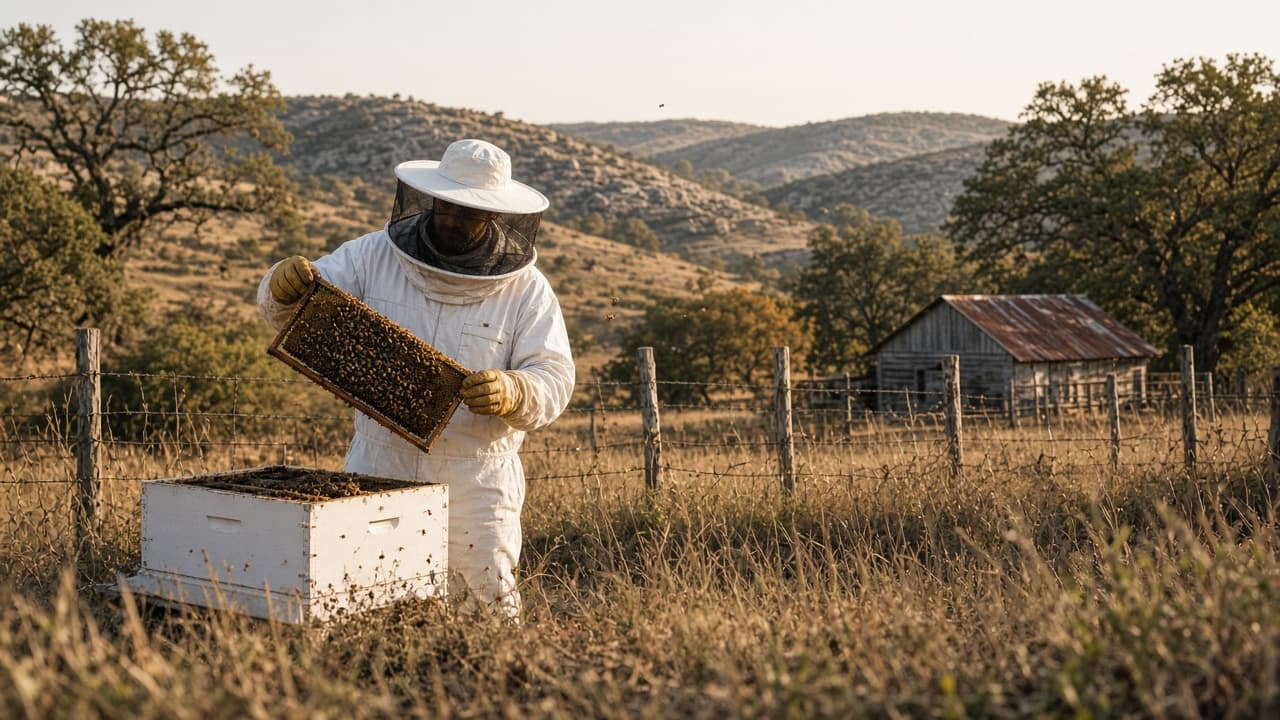
As large ranch tracts of land in the Texas Hill Country are developed into smaller acreage plots for home sites, a common property tax savings strategy for owners is to take up bee keeping to gain its agricultural valuation for the property. What does this mean and how much can a property owner benefit from it?
What is agricultural valuation?
A common misnomer for agricultural valuation is “ag exemption”, meaning that the property is not taxed a full market value, but at the greatly reduced agricultural use value. But the word “exemption” does not appear in the Texas property tax laws, but is called the “1-d-11 open-space agricultural special valuation”. Simply put, property under this categorization is subject to much lower property taxes assessed on its agricultural production value rather than its full market value. Bee keeping is recognized as an agricultural practice that qualifies for agricultural valuation with certain requirements. Small land owners choose bee keeping because it does not demand the commitments of larger livestock and crop production such as acreage division, livestock trailers, or constant supervision.
What are the legal requirements?
Texas law restricts beekeeping-based agricultural valuation to between five and twenty acres, which is a tighter band than cattle, sheep, goats or hay operations, which have no maximum. Properties with homesteads typically need one additional acre, since most counties exclude the homestead acre from the agricultural calculation. Therefore a six acre minimum if the owner lives there.
Agricultural use is required for five of the last seven years before the lower valuation applies. Use the land for a qualifying agricultural purpose for five years running, and the sixth year taxes drop. Importantly, that five year history doesn't have to be beekeeping the whole time: the requirement can be met with any qualified agricultural use, not just beekeeping — the intensity (hive count) requirement only applies in the qualification year and thereafter. If land already carries an ag valuation from cattle, hay, or another use, it is immediately eligible to move to beekeeping without restarting the clock. This is the most common on-ramp in the Hill Country, where raw land often already has grazing history.
There are minimum numbers of hives to operate to qualify for the valuation, and the minimums are set locally by each county’s tax assessor, not by the state. A minimum of six colonies is typically required for the first five acres, with one additional colony for every two acres up to twenty acres, though Hill Country counties with strong beekeeping traditions may accept lower hive counts per acre than large metro-adjacent counties like Travis or Bexar.
Application Deadline and Process
Filed with the county appraisal district, typically by April 30th of the tax year. The application is for a "1-d-1" special valuation, not the outdated "1-d" valuation which requires the owner to derive most income from farming. A 1-d-1 valuation does not require profit; the honey does not need to be sold, only "produced" (consuming or gifting it satisfies the requirement).
Life as a bee keeper
Bee keeping is a fascinating and rewarding practice, but it is not a “set it and forget it” activity. You must maintain at least the minimum number of hives required by your county. Bees require maintenance and care and the learning curve is moderately high. There is equipment and a routine for tending to the hives.
Many small land owners who do not want to maintain the hives on their five to twenty acre tract hire professional bee keepers to maintain their hive for them.
Another strategy that bee keepers use is to leave the practice of bee keeping and convert to wildlife management. This is a property use practice made possible by a cooperative effort of county tax appraisal districts and the Texas Department of Wildlife. The landowner adopts a set of practices to make their property amenable to indigenous wildlife, promoting their well being. The requirements are:
Land under 1-d-1 open-space valuation for at least one year may be converted to wildlife management valuation, regardless of acreage, meaning the five to twenty acre bee-specific cap disappears once converted; wildlife management has no acreage ceiling. The land must be used to propagate a breeding, migrating, or wintering population of indigenous wild animals, and that wildlife must be for human use — food, medicine, or recreation.
A landowner must generally undertake at least three approved wildlife-management practices, habitat control, erosion control, predator control, supplemental food/water/shelter, or census counts, and must document them annually, though reapplication each year is typically not required, just ongoing documentation.