
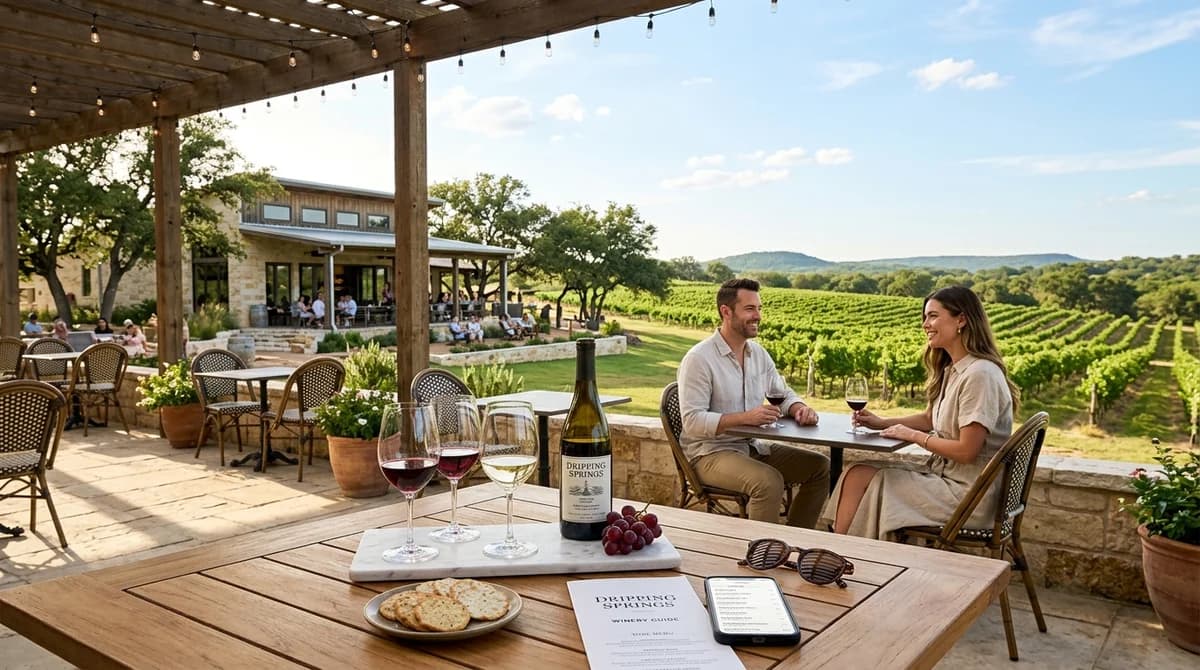
The Dripping Springs area might be better known for its distilleries and breweries — Deep Eddy Vodka and Treaty Oak have put the town on the national spirits map — but wine deserves its own conversation here. The Hill Country vineyards in and around Dripping Springs are producing some genuinely interesting bottles, and the tasting room experiences they've built around their wine are among the most enjoyable in Central Texas.
Within a short drive of Dripping Springs, you can visit estate vineyards, family-operated wineries that have been producing for decades, and newer operations still finding their identity and doing interesting experimental work. The region sits within the larger Texas Hill Country AVA (American Viticultural Area), which has grown into one of the most significant wine-producing regions in the country — not compared to Napa, but by any honest measure of diversity, innovation, and quality trajectory.
Here's a guide to the wineries worth visiting near Dripping Springs and what makes each one distinctive.
Bell Springs Winery
Bell Springs Winery has earned a devoted local following for producing top-notch wines in a setting that's as inviting as the wine itself. The vibe at Bell Springs is intentionally laid-back — this isn't a white-tablecloth wine experience, it's a Hill Country afternoon experience, with outdoor seating, long views, and the kind of unhurried atmosphere that makes it easy to linger through multiple glasses.
The wines at Bell Springs lean toward accessible, fruit-forward styles that drink well on the patio. Reds tend to be the strength of the lineup, with Texas-grown grapes from both the Hill Country and the High Plains producing bold, satisfying bottles. The Cabernet Sauvignon and Texas Tempranillo are consistently reliable choices.
What people love most about Bell Springs is that it feels genuinely local without being pretentious about it. You can come in dressed for a day of wine tasting or straight from hiking and feel equally at home. That accessibility, combined with genuinely good wine, makes it a reliable first stop on any Dripping Springs winery tour.
Solaro Estate
Solaro Estate brings something to the Dripping Springs wine scene that very few wineries in Texas can offer: multi-generational winemaking heritage. The family behind Solaro has been producing wine for five generations, and that depth of experience and tradition is evident in both the wine and the experience of visiting.
The estate aesthetic runs toward European formality — you'll find a level of polish and intentionality at Solaro that reflects the family's old-world winemaking roots. The tasting room is beautiful, the grounds are carefully maintained, and the wines are made with a precision and consistency that comes from decades of practice rather than trendy experimentation.
For visitors who appreciate knowing the story behind their wine, Solaro is a rewarding stop. The staff are knowledgeable about the family history and winemaking philosophy, and a visit here gives you context for Texas wine in a way that a stop at a newer operation doesn't quite deliver.
If you're putting together a wine day that builds from approachable and casual toward more serious and structured, ending at Solaro makes sense. It's a destination that rewards a slower pace and genuine curiosity.
Tillie's Vineyard
The connection between the acclaimed Dripping Springs restaurant Tillie's and a nearby vineyard isn't just marketing — the restaurant actually sources grapes from a neighboring vineyard and produces wine under its own label. For wine lovers visiting Dripping Springs, this means you can taste the wine at dinner in a restaurant context, which provides a different and often more illuminating experience than a standard tasting room flight.
Wines produced in partnership with the Tillie's program tend toward the gastronomic end of the spectrum — wines designed to complement food rather than be consumed in isolation. If you're dining at Tillie's, ask about the current vintage and the story behind the grapes. It's a genuinely satisfying farm-to-table story that extends from the vineyard to your glass at the table.
The Broader Hill Country Wine Corridor
The wineries immediately around Dripping Springs are part of a much larger wine region that runs up and down the US-290 corridor between Austin and Fredericksburg. This stretch of highway — sometimes called the "290 Wine Road" or the "Hill Country Wine Trail" — passes through Driftwood, Dripping Springs, Johnson City, and Stonewall before reaching Fredericksburg, and the wineries along the way include some of the best-known names in Texas wine.
A few worth noting that are within reasonable reach of Dripping Springs:
Duchman Family Winery in Driftwood focuses exclusively on Italian grape varieties grown in Texas soil, producing wines from Montepulciano, Vermentino, Dolcetto, and other Italian cultivars that rarely appear in American winemaking. The results are distinctive, food-friendly wines that provide a genuinely different tasting experience from what most Texas wineries offer. The Driftwood location is beautiful, with a Tuscan-inspired setting that's genuinely lovely rather than kitschily themed.
Bending Branch Winery (also closely associated with the Comfort area) grows Tannat and other French and Spanish varieties and has been doing some of the most interesting winemaking in the Hill Country for years. Their estate is about 45 minutes from Dripping Springs, but the drive through the Hill Country is part of the experience.
The "Dripping with Taste" Trail Pass
If you're serious about exploring the full range of wineries, breweries, distilleries, and tasting rooms in the Dripping Springs area, the "Dripping with Taste" Trail Pass is your best planning tool. This app-based system covers 50 producers in the Dripping Springs and Driftwood area, providing a guided discovery experience with rewards as you work through the map.
It's particularly useful for visitors who want to go beyond the well-known names and discover smaller, emerging producers that don't yet have large marketing budgets or significant social media followings. Some of the best discoveries in any wine region happen at the places you'd never find without a recommendation, and the Trail Pass essentially gives you 50 local recommendations in a single download.
Planning Your Dripping Springs Winery Day
The US-290 corridor is your spine. Most of the wineries in the Dripping Springs orbit are accessible along or just off US-290, which makes navigating a multi-winery day straightforward. Plan your route before you leave — driving the corridor from east to west (toward Fredericksburg) and stopping at wineries in order prevents backtracking.
Pair with food thoughtfully. Wine tasting on an empty stomach is nobody's best afternoon. Many wineries in the area offer light bites, charcuterie, or snacks — check what's available before you arrive, and plan a proper meal at either Rolling in Thyme & Dough or Tillie's at the beginning or end of your day.
Go on a weekday if you can. The US-290 corridor is busy on weekends, especially during spring wildflower season (March–April). Weekday tastings at most wineries are quieter, more personal, and often result in more time with the staff and more detailed conversations about the wine.
Spring and fall are peak season. The Hill Country wine tourism season tracks closely with the region's weather: spring visits coincide with wildflower bloom, and fall visits often catch end-of-season specials and harvest events. Both are excellent times to visit, but book ahead if you're going during these periods, as tasting room reservations can fill up at the more popular destinations.
Buy the bottles you love. Texas wine is difficult to find outside Texas, and even within Texas, not every Hill Country wine makes it to a shelf near you. If you taste something remarkable at a Dripping Springs winery, buy it in the tasting room. You probably won't find it at your local wine shop at home.
A Wine Region on the Rise
Texas wine has sometimes been dismissed by the coastal wine establishment, and there was a time when that dismissal wasn't entirely unfair. But the Texas Hill Country wine region has been on a consistent quality trajectory for the past decade, and the wineries around Dripping Springs are part of that story.
The combination of appropriate grape varieties (Texas summers reward varieties like Tempranillo, Mourvèdre, and Tannat that can handle heat), improving winemaking technique, and a growing culture of experimentation and ambition is producing wines that can stand up to genuine scrutiny. Singing Water Vineyards winning the San Francisco Chronicle's award for best Cabernet Sauvignon is not a fluke — it's evidence of a region that's learned what it can do well and is doing it.
Come with an open mind, taste widely, and you'll leave with a better understanding of Texas wine and probably a few bottles you're excited to open at home. That's the best possible outcome of any wine country visit, and the Dripping Springs area delivers it.