
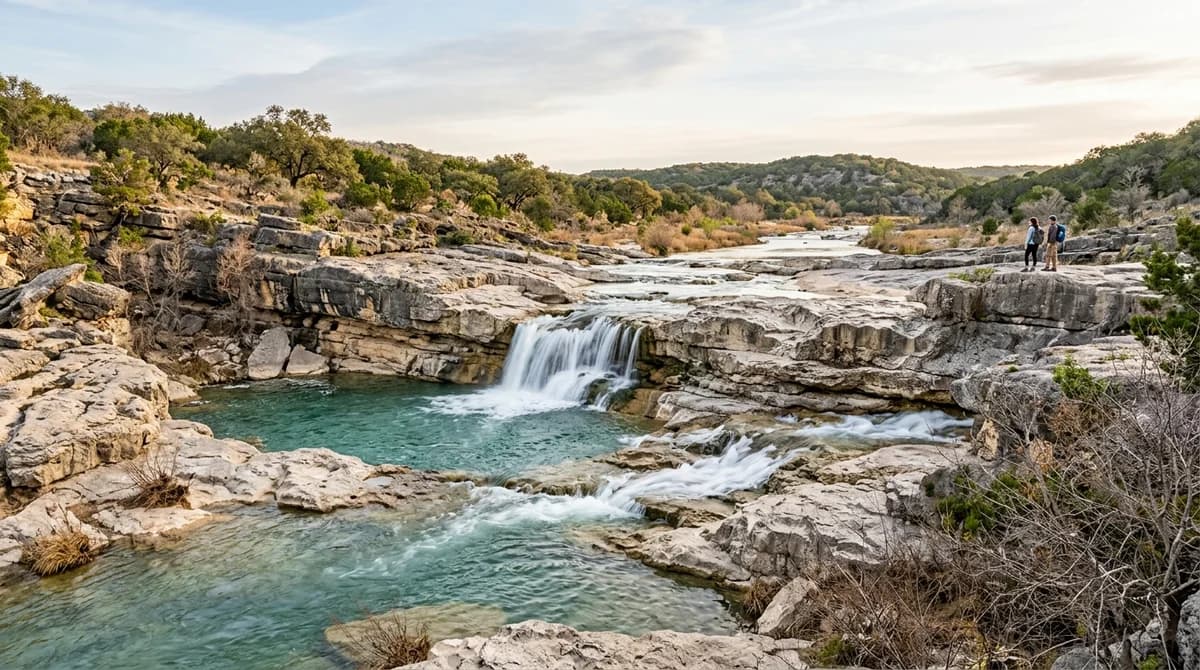
About 30 minutes west of Dripping Springs, where the Pedernales River cuts through layered limestone shelves to create one of the most dramatic natural landscapes in the Texas Hill Country, you'll find Pedernales Falls State Park. This is one of Central Texas's most visited and most loved state parks — and once you've stood at the top of the falls and watched the river pour through those ancient stone channels, you'll understand completely why.
But Pedernales Falls is more than just a great view. The park covers nearly 5,000 acres and offers hiking, mountain biking, swimming, camping, horseback riding, bird watching, and fishing across a range of terrain that goes well beyond the famous falls themselves. It rewards every type of outdoor visitor, from families looking for an easy afternoon to serious hikers and mountain bikers who want a full-day challenge.
Here's everything you need to know before you go.
Getting There
Pedernales Falls State Park is located at 2585 Park Road 6026, Johnson City, TX 78636. From Dripping Springs, take US-290 West toward Johnson City, then turn north on Ranch Road 3232. The park entrance is well marked and takes about 30 minutes from downtown Dripping Springs. From Austin, plan for about an hour depending on traffic and your starting point.
Day-use fees apply — purchase your Texas State Parks pass if you plan to visit multiple times, as it pays for itself quickly. The park entrance station is staffed during daytime hours.
The Falls: What to Know Before You Walk In
The Pedernales Falls are the park's signature attraction, and they live up to the hype. The river drops over a series of tilted limestone shelves in a spectacular staircase of cascades that spans several hundred yards. When the water is running well — especially after rain — the sight and sound of the falls are genuinely impressive. Even in drier seasons, when the flow is lower, the exposed limestone formations are beautiful and geologically fascinating.
A few important things to understand about the falls before you visit:
Swimming and wading are not allowed in the falls area. This is a firm rule, not a suggestion, and it exists for very good reason. The water in the Pedernales can rise from a calm, ankle-deep trickle to a dangerous torrent in minutes when thunderstorms are occurring anywhere upstream. People have been killed by flash floods here, and the risk is real even on a sunny day if there's weather elsewhere in the watershed. Pay attention to the warning signs, obey the rangers, and stay out of the water in the falls zone.
Flooding can close the park. The park road is low-lying and the river can flood quickly. Check the park's website or call ahead before visiting if there's been recent heavy rain in the region.
The best view of the falls requires a short walk. The falls overlook is a .5-mile round trip from the parking area on a well-maintained path. The Twin Falls Nature Trail is an easy, accessible walk that stops at a scenic overlook above the falls — a great option for families with young children or anyone who wants the view without a serious hike.
Swimming: The Beach Area
While swimming is prohibited at the falls, the park does have a designated swimming area between Trammell Crossing and the youth camping area where swimming is permitted. This is a more protected section of the river with a sandy beach area that's popular with families.
Be aware: accessing the swimming area requires a strenuous quarter-mile hike that includes steep rock stairs with no handrail. It's manageable for most adults and older kids, but it's not accessible for strollers or for anyone with mobility limitations. The effort is worth it on a hot day — the river is clear, cold, and beautiful — but go in knowing what you're signing up for.
As with all swimming in the Pedernales, stay alert to changing conditions. Muddy water or floating debris upstream are early warning signs of a rise in water level. If you see either, get out of the water and move to higher ground immediately.
Hiking
Pedernales Falls State Park has excellent trails for every ability level.
Twin Falls Nature Trail (0.5 miles, easy): The easiest and most popular trail, ending at the scenic overlook above the falls. Perfect for families, first-time visitors, and anyone who wants the signature view without committing to a long hike. Highly recommended as a starting point.
Wolf Mountain Trail (6 miles, challenging): This is the park's signature long hike and one of the more rewarding trails in the Hill Country. The loop wraps around Tobacco and Wolf Mountains, winds along small canyons carved by Mescal and Tobacco Creeks, and offers views of the river valley and surrounding landscape. The trail is rocky and involves significant elevation change — it's not for casual walkers, but experienced hikers will find it thoroughly satisfying. Wear proper footwear, bring more water than you think you need, and start early to avoid the midday heat in summer.
Additional trails: The park has several other trails of varying length that explore the oak-juniper woodland and river bottomland. A trail map is available at the park entrance and on the Texas Parks & Wildlife website.
Mountain Biking
The Juniper Ridge Trail is a 10-mile technical single-track mountain bike trail that has become a destination in its own right for Hill Country mountain bikers. The trail provides significant obstacles and challenges for more advanced riders, with the rocky limestone terrain and steep grades that make Hill Country riding both difficult and uniquely rewarding. Less experienced riders should look at other options — this one is not a beginner trail.
Bring your own bike; there are no rentals in the park. Helmets are required. The trail can be closed after significant rain, so check conditions before you go.
Camping
Pedernales Falls State Park has 63 developed campsites with electricity and water hookups, and 21 primitive campsites for those who want to camp without utilities. The campgrounds are set in the oak-juniper woodland and offer a genuine Hill Country camping experience with access to all of the park's trails and facilities.
The park is extremely popular, especially in spring and fall, and campsites book up fast. Make reservations through the Texas State Parks reservation system as early as possible — weekends in March, April, October, and November can be fully booked months in advance. If you're planning a spring wildflower camping trip, make your reservation as soon as reservations open for your dates.
Primitive campsites offer a quieter, more immersive experience if you're comfortable camping without hookups. They tend to be a bit easier to book on short notice than the developed sites.
Bird Watching
The park's diverse habitat — river bottomland, limestone woodland, open grassland, and rocky hillside — supports an impressive variety of bird species throughout the year. In spring and summer, the Golden-Cheeked Warbler (an endangered species found only in the Texas Hill Country) nests in the park's mature juniper-oak woodland. Black-Capped Vireos are also present. Both species draw serious birders from across the country.
Year-round, the park offers good opportunities to see raptors (Red-tailed Hawk, Cooper's Hawk, and Osprey along the river), songbirds, waterfowl on the river, and a variety of owls that are more easily heard at dusk and dawn than seen.
Bring binoculars and a field guide. Early mornings are the best time for bird activity. The area along Tobacco Creek on the Wolf Mountain Trail is particularly productive for warbler sightings in spring.
Fishing and Other Activities
The Pedernales River offers fishing for catfish, bass, and sunfish within the park. A Texas fishing license is required. Check current regulations for the river with Texas Parks & Wildlife before you go.
Horseback riding is permitted on designated trails. Riders must bring their own horses; there are no equestrian rentals in the park. The park has an equestrian staging area and designated horse trails — review the current equestrian trail map before planning an equestrian visit.
Picnicking areas are available near the falls overlook and in other locations throughout the park. The sites are shaded and equipped with tables and grills, making them a great option for families who want to eat in the park without camping.
Geocaching is permitted in the park and has become a popular way for families to explore the trails with an extra layer of purpose and discovery.
Best Times to Visit
Spring (March–May): The most spectacular time to visit. Wildflowers bloom across the Hill Country, the river typically has good flow from spring rains, and the weather is ideal for hiking and camping. It's also the most crowded time, especially on weekends.
Fall (September–November): A close second. The heat breaks, the crowds thin slightly from peak summer, and the landscape takes on fall color in October and November. The Wolf Mountain Trail is particularly beautiful in the fall.
Summer (June–August): Hot — sometimes very hot — but the swimming area becomes the main attraction. Go early in the morning for hiking and plan to be in or near the water by midday. The park is popular with families during summer.
Winter (December–February): The least crowded season and often very pleasant weather-wise, especially in December and January when sunny days in the 60s are common. Wildflower bluebonnets begin appearing in late February in warm years.
Practical Tips
Bring more water than you think you need. The limestone terrain and Texas sun combine to dehydrate you faster than you might expect.
Wear closed-toe shoes with good grip. The limestone rocks throughout the park are often irregular and can be slippery when wet.
Download the park map before you go. Cell service in the park is unreliable.
Arrive early on weekends. The park does reach capacity on busy days and can temporarily close its entrance to additional visitors.
Check the park's website (tpwd.texas.gov/state-parks/pedernales-falls) before your visit for current conditions, closures, and any special considerations.
Worth Every Minute
Pedernales Falls State Park is one of those places that makes you glad Texas has a state parks system. It's beautiful, accessible, varied enough to reward multiple visits, and managed well enough that you can actually experience the landscape rather than just sharing a parking lot with a thousand other people. From Dripping Springs, it's close enough to be a morning trip and good enough to be a reason to stay all day.
Go once and you'll be planning your return before you've even made it back to the parking lot.