
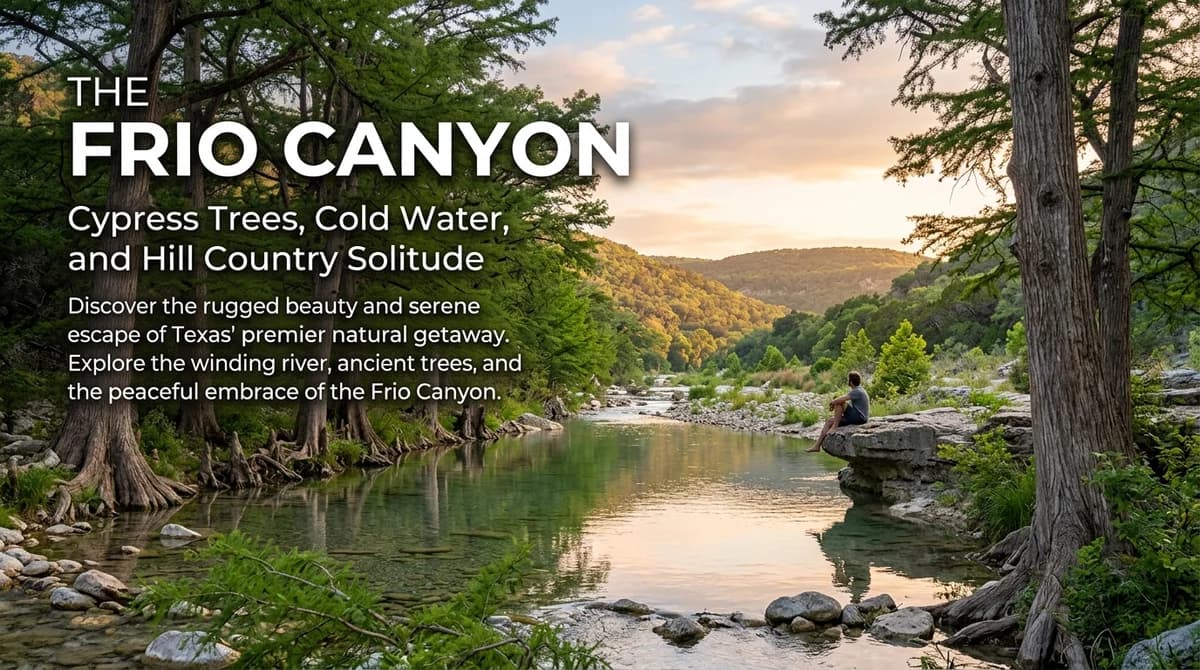
Before the first cabin was built on the Frio River, before Garner State Park existed, before anyone called it a destination, the canyon was already there — a fold in the Edwards Plateau where water had spent years carving through limestone, creating bluffs and pools and a river corridor lined with some of the oldest and most beautiful trees in Texas. The human story of the Frio Valley is interesting. The geological story is extraordinary.
Understanding the landscape makes the experience of being in it richer. Here's the story of what you're looking at when you're in the Frio Canyon.
The Geology: An Ancient Seabed, Uplifted
The limestone that forms the walls and floor of the Frio Canyon was created when this part of Texas lay beneath a shallow inland sea. The shells, skeletons, and organic material of marine organisms accumulated on the seafloor over millions of years, compressing and cementing into the limestone that you're standing on and swimming over today.
The geological formation most visible in the Frio Canyon is part of the Glen Rose limestone — a sequence of limestone, shale, marl, and siltstone beds that forms the surface geology of much of the Texas Hill Country. The characteristic cream-colored, layered rock visible in the canyon bluffs is this material, eroded over time by the river's patient cutting and by the weathering of rain and freeze-thaw cycles.
The broader geological context is the Edwards Plateau, the enormous limestone table that defines the Texas Hill Country. The plateau was formed when the ancient sea floor was uplifted along the Balcones Fault Zone — the same zone of geological activity that created the springs at San Marcos and New Braunfels and that defines the transition between the Hill Country and the coastal plain. The Frio River and its canyon are the result of that plateau's gradual erosion by water moving toward the Gulf.
The karst character of the limestone — porous, fractured, full of caves and sinkholes — means that rainwater moving through the Hill Country doesn't simply run off. It percolates through the rock, recharging the Edwards Aquifer that supplies San Antonio and the spring systems of the region. The Frio Canyon sits on the edge of the aquifer recharge zone, making the entire landscape part of the living water system that feeds Texas's most important underground reservoir.
The Bald Cypress: The River's Most Distinctive Tree
If the Frio Canyon has a signature organism, it's the bald cypress — Taxodium distichum — the deciduous conifer that lines the river's banks in massive, ancient specimens whose presence defines the visual and atmospheric character of the entire experience.
Bald cypress is native to the riparian zones of the American South and the Texas Hill Country, where it has evolved to grow with its root system partially submerged in the water that it needs for sustained growth. The characteristic "knees" — woody projections that rise from the root system through the shallow water around the tree's base — are visible throughout the Frio's most heavily timbered sections, creating an otherworldly series of forms that photographers return to repeatedly.
The trees along the Frio are not young. Some of the cypress specimens in the canyon have been aged to several hundred years. A core sample taken from a bald cypress in the broader Hill Country region in 2009 provided a conservative age estimate of more than 600 years. The trees that shade the most popular swimming holes at Garner State Park and along the river road were large trees when the first European explorers came through the Frio Canyon, and they were enormous when Tom Neal built the first cabins at Neal's Lodges a century ago.
The cypress canopy does several things for the Frio experience. It provides shade over the river's most-used sections, keeping the water and the immediate riverside temperature several degrees lower than the exposed hillsides above. It creates a filtered, dappled quality of light on the water that is one of the most photographed natural phenomena in the Texas Hill Country. And it creates habitat — the complex microenvironment of roots, knees, overhanging branches, and dappled water supports the aquatic life that makes the river interesting below the surface as well as above it.
In late October and November, the cypress trees turn. Unlike the dramatic multicolor fall foliage of the eastern United States, the bald cypress goes through a quieter transformation — the feathery needles shift from green to a warm copper-gold, and in the canyon light of late afternoon they reflect onto the water in a color that doesn't exist any other time of year. The Frio in November, with the copper cypress reflected in still pools and the crowds long gone, is a version of the canyon that most summer visitors never see.
The Other Trees: Pecan, Sycamore, and Live Oak
The cypress is the signature, but the Frio Canyon supports a rich diversity of trees that contribute to its character.
Pecan trees — Texas's state tree — grow abundantly along the Frio's lower terraces, their canopies spreading wide over the floodplain in the manner of riparian trees that have had centuries to find their space. In fall, the pecan trees produce their nuts in the canyon, a harvest that the wildlife and the occasional observant human can benefit from.
Sycamores with their distinctive mottled white-gray-green bark line the steeper, rockier sections of the canyon where the limestone bluffs descend directly to the water. Sycamores thrive in the wet, rocky conditions of Hill Country creek and river banks, and their pale trunks are immediately recognizable in the canyon's visual texture.
Live oak covers the drier hillsides above the river corridor in the spreading, low-canopied form that defines Hill Country terrain across the region. These are evergreen trees that hold their leaves through winter, giving the canyon a green character even in the coldest months, when the deciduous cypress and sycamore have gone bare and the limestone bluffs are more exposed.
Ashe juniper — the cedar of Hill Country vernacular, though it's technically a juniper — covers the steeper, stonier hillsides above the river in dense thickets that are ecologically important even if less visually dramatic than the riverside trees. The mature Ashe juniper woodland is the specific habitat required by the golden-cheeked warbler, one of the region's most sought-after bird species.
The Canyon Topography: What You're Looking At
The Frio Canyon is not a dramatic gorge by any measure — the limestone bluffs that rise above the river are rarely more than a few hundred feet, and the overall effect is of a pleasant, sheltered valley rather than a dramatic geological feature. But the canyon's character is precisely in that pleasantness: a human-scale landscape where the river, the trees, the bluffs, and the sky create a setting that feels enclosed and complete.
The bluffs are particularly notable at several points along the river, where the limestone has been undercut by flood action to create overhanging faces that shade the river below. These undercut banks are cool even in the height of summer — the combination of shade and cold river air creates pockets of refreshment in the canyon that are as valued on a July afternoon as any pool.
The bend patterns of the river create the alternating character of the float experience: long, straight stretches of calm current broken by the bends where the water deepens into pools, the limestone ledges where the current picks up, and the exposed gravel bars where the river shallows out in the late summer. Each section of the river has a different character and a different use, and the variety is part of what makes a day on the Frio satisfying rather than repetitive.
The Canyon in Different Seasons
Summer brings the most visitors and the most energy. The river is cold, the cypress canopy is full, and the combination of cold water against hot air creates the specific physical pleasure that has been drawing Texans here for a century. The light through the full cypress canopy in July is extraordinary.
Fall offers the cypress color, diminished crowds, and a quality of quiet that summer doesn't have. The mornings are cool, the afternoons are comfortable rather than searing, and the canyon assumes a different, more introspective atmosphere as the season shifts.
Winter in the Frio Canyon is mild by national standards — cold fronts push through, temperatures can drop to freezing, but the canyon's sheltered position moderates the extremes. The bare winter cypress allows different views of the limestone bluffs than summer permits, and the canyon has a stark, beautiful quality in the short winter days that long-term visitors come back for specifically.
Spring brings the wildflowers to the canyon roads and the surrounding Hill Country, higher water from winter rains, and the return of the migratory birds that stop along the Frio corridor on their way north. The river is fast and cold in early spring, and the combination of wildflowers along the canyon rim and cold clear water below is one of the Frio's most complete seasonal expressions.
The Canyon at Its Most Itself
The Frio Canyon's essential character — what it always is, regardless of season or crowd level — is a combination of geological time and living water. The limestone bluffs were formed over 100 million years. The cypress trees are centuries old. The river has been running cold through this canyon since before Texas was a state, before the Republic, before any European foot touched this ground.
Being in the canyon, swimming in the cold water under those ancient trees, is a way of touching something that measures its age in completely different units than a summer vacation does. The tourists come and go. The river runs cold. The cypress trees hold their ground. And the canyon remains exactly what it has always been — patient, cool, and extraordinarily good at making people feel that they've found the right place.