
 LoneStar Network Staff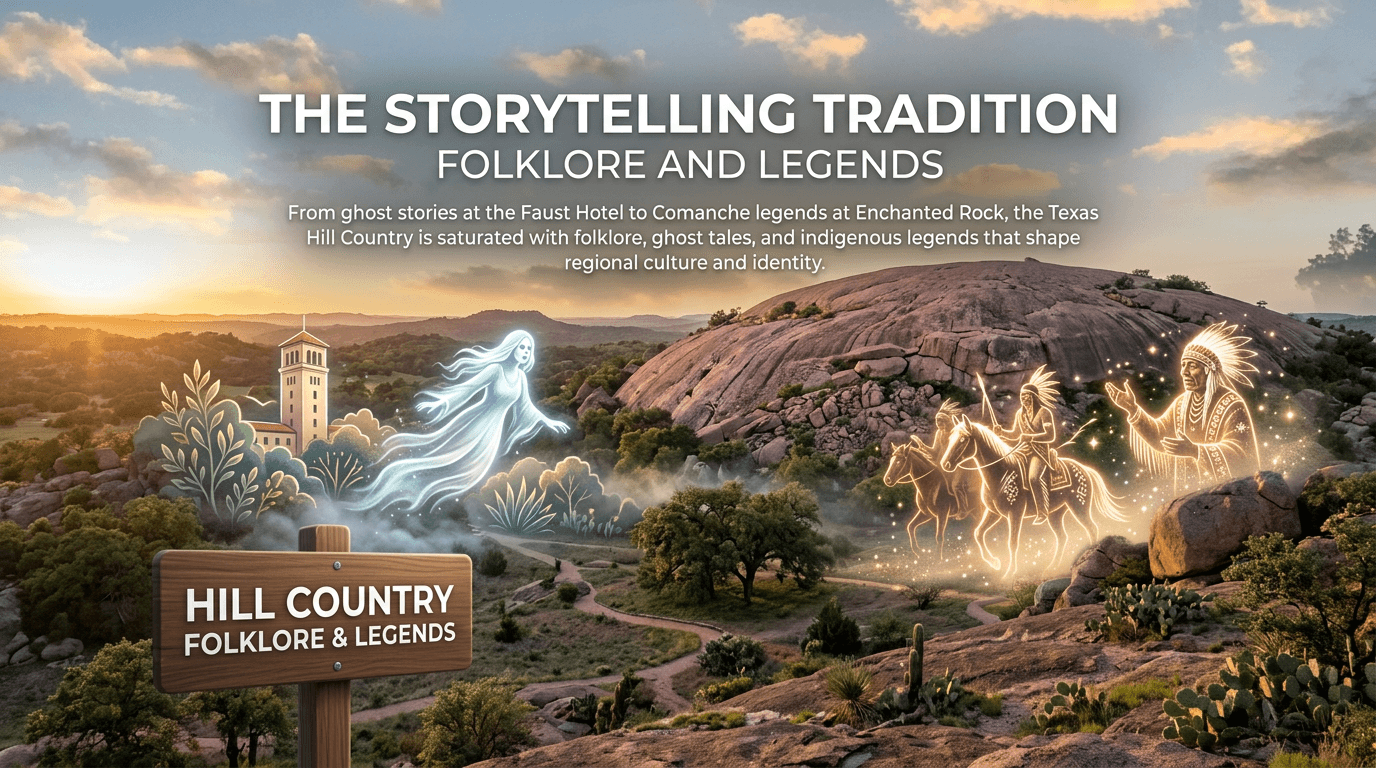
The Texas Hill Country pulses with stories. Walk through a historic downtown, and you'll hear legends about buildings and the people who inhabited them. Visit natural landmarks, and you'll encounter indigenous stories explaining geological features and natural phenomena. Gather locals in a bar or coffee shop, and storytelling naturally emerges—tales of frontier life, natural disasters, unusual characters, and unexplained phenomena.
This storytelling tradition runs deep. The Hill Country's diverse settlement history—indigenous peoples, Spanish colonizers, German immigrants, Anglo-American pioneers—created multiple overlapping cultural traditions, each with distinctive folklore. These traditions continue, adapting to contemporary contexts while maintaining connections to historical roots.
Understanding Hill Country folklore reveals something essential about regional culture: a community that values narrative, remembers history through stories, and finds meaning in tales connecting past to present.
Indigenous Legends and Rock Art Storytelling
Before written history, indigenous peoples inhabited the Hill Country, leaving stories encoded in rock art and oral traditions.
Enchanted Rock and Comanche Legends
Enchanted Rock, the massive pink granite dome dominating Gillespie County, figures prominently in Comanche and Apache legends. Various versions of the legend exist, but common elements include:
The rock is described as enchanted, with spirits inhabiting it and mysterious sounds and lights reported by those who venture there. Some versions describe the rock as sacred to indigenous peoples, holding spiritual power and connection to ancestors.
The legend likely contains kernels of historical and cultural truth. The rock's striking appearance made it memorable and culturally significant. Acoustic properties of the granite might create unusual sounds, lending credence to supernatural claims. The rock might have served ceremonial or spiritual purposes.
Whether literally true or allegorical, the Enchanted Rock legend demonstrates indigenous presence and spiritual understanding of the landscape—important recognition given historical erasure of native peoples from Hill Country narratives.
Devil's Waterhole and Water Spirit Stories
Water sources in the semi-arid Hill Country held special significance. Several locations feature stories about water spirits, mysterious phenomena at water sources, and spiritual or supernatural connections to water.
Devil's Waterhole (near Wimberley) carries stories of mysterious happenings and unexplained phenomena associated with the deep water pool. Whether reflecting actual indigenous stories or Anglo-American reinterpretation, the legend demonstrates spiritual significance attached to water sources.
The Little People and Rock Art Traditions
Some indigenous Hill Country stories reference "little people"—small beings inhabiting the landscape. Rock art sites sometimes allegedly depict these beings. The stories might reference actual small-statured peoples, spiritual beings, or metaphorical representations of natural forces.
Contemporary scholars work to recover authentic indigenous traditions while recognizing that surviving stories often represent colonial-era reinterpretations or partial understandings of original traditions.
German Folk Traditions and Settlement Legends
German immigrants brought European folklore traditions while creating new legends in their Hill Country homeland.
The Faust Hotel (New Braunfels) Ghost Story
The historic Faust Hotel in New Braunfels (established 1907) figures in one of the Hill Country's most famous ghost stories. According to legend, the ghost of Walter "Wally" Faust, a family member who died in the hotel, still inhabits the building.
Stories describe unexplained noises, objects moving mysteriously, and guest reports of unusual experiences. The legend has made the Faust Hotel a destination for paranormal enthusiasts and ghost hunters, even as some dismiss the stories as folklore and marketing.
The legend demonstrates how historic buildings become repositories for community memory and storytelling, with ghost stories serving as cultural mechanisms for remembering history and maintaining community connection to place.
German Ghost Legends and Spirit Traditions
German folklore emphasizes spiritual beings inhabiting landscape and buildings. Some Hill Country German communities maintained European beliefs about spirits, hauntings, and supernatural phenomena, though these traditions have largely faded among contemporary communities.
Folklorist collections document stories of ghostly figures, spirit animals, and supernatural occurrences from 19th and early 20th-century German Hill Country communities, representing cultural memory of ancestral traditions.
Pioneer and Frontier Legends
The Anglo-American frontier period (1830s-1880s) created distinctive folklore reflecting the challenges, dangers, and adventures of settlement.
Comanche and Native American Conflict Stories
Frontier legends often depicted native peoples as threats, reflecting Euro-American perspective on frontier conflict. These stories often emphasize danger and violence, sometimes exaggerating historical conflicts and creating stereotypes.
Critical contemporary historical scholarship attempts to recover more balanced accounts while recognizing that these legends reveal Euro-American frontier psychology and cultural values.
Natural Disaster and Survival Stories
Hill Country pioneer experiences included natural disasters: extreme weather, flash floods, droughts. These events generated stories emphasizing human resilience, cooperation, and adaptation.
Stories of settlers surviving flash floods, droughts, or extreme weather events served cultural functions: demonstrating community capability, justifying settlement despite environmental challenges, and creating shared cultural memory.
Distinctive Character and Outsider Stories
Frontier communities often developed stories about unusual individuals—eccentrics, outliers, people who seemed to embody frontier values or challenge community norms.
These character-based stories served multiple functions: entertainment, humor, moral instruction, and processing of difference within community contexts.
Outlaw and Bandit Legends
The American frontier and Hill Country settlement period overlapped with outlaw activity. This period generated legends about bandits, gunfighters, and outlaws.
While some Hill Country outlaw legends likely contain historical kernels, many became exaggerated through retelling, creating archetypal outlaw narratives that reflected cultural anxieties and values more than historical accuracy.
Supernatural and Unexplained Phenomena
Hill Country folklore includes substantial categories of supernatural stories: ghosts, mysterious lights, unexplained sounds, strange creatures, and paranormal phenomena.
These stories might reflect:
- Actual unexplained phenomena requiring investigation
- Misidentification of natural phenomena (unusual weather, animal behavior, geological sounds)
- Cultural traditions processing fear, death, and the unknown
- Entertainment and community bonding through shared storytelling
Regardless of literal truth, these stories reveal what communities fear, value, and find worthy of remembrance.
Contemporary Storytelling Traditions
Oral History and Interview Traditions
The Hill Country maintains strong oral history traditions. Local historical societies, genealogical organizations, and community memory projects document stories from longtime residents.
These contemporary storytelling efforts preserve memory while recognizing that historical narratives often reflected particular perspectives (often white, male, property-owning perspectives) that didn't represent all community members' experiences.
Written Collections and Folklore Documentation
Several scholars and writers have documented Hill Country folklore:
Local History Books: Numerous books about specific Hill Country communities include folklore, historical narratives, and cultural traditions.
Folklore Collections: Academic and popular collections document Hill Country stories, often with efforts to preserve authentic traditions while noting how stories have been transformed through retelling.
Genealogy and Family History: Family genealogical research often uncovers stories, sometimes legendary or exaggerated, about ancestors and family history.
Community Storytelling Events
Many Hill Country communities host storytelling events, historical reenactments, and cultural festivals celebrating local history and legend:
Historical Society Programs: Museum programs, lectures, and public presentations tell community history and local stories.
Ghost Tours and Paranormal Programs: Several Hill Country towns offer ghost tours and paranormal investigation programs, mixing entertainment with folklore exploration.
Festival Storytelling: Cultural festivals often include storytelling components celebrating community history and tradition.
The Functions of Folklore
Understanding why communities maintain and tell stories reveals their cultural significance:
Memory and History Preservation
Stories preserve memory in narrative form, making history memorable and emotionally resonant. While stories may not be historically precise, they maintain cultural memory in ways that survive better than historical documents.
Meaning Making
Stories help communities understand landscape, history, and experience. A ghost story about a hotel might explain the building's significance and help people remember history in emotionally meaningful ways.
Identity and Belonging
Shared stories create community identity. Knowing local stories and participating in storytelling traditions strengthens feelings of community belonging.
Entertainment and Social Bonding
Storytelling provides entertainment and creates social occasions for community gathering. The pleasure of a well-told story bonds communities and creates shared cultural moments.
Moral and Cultural Instruction
Stories embed cultural values and provide moral instruction. Tales about frontier pioneers might emphasize resilience, cooperation, and determination—values communities want to maintain.
Processing Fear and Mystery
Stories about ghosts, supernatural phenomena, and unexplained events provide cultural frameworks for processing fear, death, and mystery—universal human concerns.
Critical Perspectives on Hill Country Folklore
Contemporary folklore scholarship emphasizes several important considerations:
Whose Stories Count?
Traditional folklore collection often documented stories from particular community members—often elders, male community leaders, or people in positions of authority. Stories of women, marginalized communities, and those without social power were often overlooked.
Contemporary efforts attempt to recover more inclusive storytelling traditions and recognize that different community members had different stories to tell about shared experiences.
Authenticity and Transformation
Stories change through retelling, and it's often impossible to recover "original" versions of folklore. Each retelling transforms stories in light of contemporary concerns and audiences. Understanding this doesn't invalidate folklore but helps us appreciate how stories live and change.
Cultural Appropriation and Respect
Indigenous legends and stories deserve particular respect and care. Using indigenous stories for entertainment without acknowledging indigenous perspectives or supporting indigenous communities raises important ethical questions.
The Relationship Between History and Legend
While folklore contains historical kernels, stories are not reliable historical sources. Understanding folklore requires distinguishing between historical fact and legendary elaboration while recognizing that legends reveal cultural values and psychology even when historically inaccurate.
Creating Your Own Hill Country Folklore Experience
Visit Folklore Sites
Visit locations central to Hill Country folklore:
- Enchanted Rock State Natural Area
- The Faust Hotel (you can stay overnight)
- Historic downtowns where ghost tours might be available
- Local historical society museums with folklore exhibits
Attend Storytelling and History Events
Participate in community events featuring storytelling, local history presentations, and cultural celebrations.
Conduct Oral History Interviews
Record stories from longtime Hill Country residents. Many people love sharing stories about their lives and communities. These contemporary oral histories create valuable community memory.
Research Your Family Stories
Investigate your own family's Hill Country connections. Family stories often contain folklore, legendary elements, and cultural traditions worth exploring.
Read Local History and Folklore Collections
Engage with written documentation of Hill Country stories, history, and folklore. Local history sections of libraries often contain underutilized collections.
Key Takeaways
- The Hill Country's diverse settlement history created multiple overlapping folklore traditions
- Indigenous legends and rock art stories preserve cultural memory of pre-contact peoples
- German, pioneer, and frontier periods generated distinctive folklore reflecting cultural values and experiences
- Ghost stories and supernatural legends serve cultural functions beyond entertainment—they preserve memory and process universal human concerns
- Contemporary folklore scholarship emphasizes inclusivity, critical analysis, and respect for indigenous traditions
- Hill Country communities maintain storytelling traditions through oral history, festivals, and community events
- Engaging with Hill Country folklore reveals cultural values, historical experiences, and connections between past and present
- Folklore is not historical truth but valuable cultural expression worth exploring with critical appreciation
Tags: Folklore, Legends, Storytelling, History, Hill Country, Indigenous, Culture