
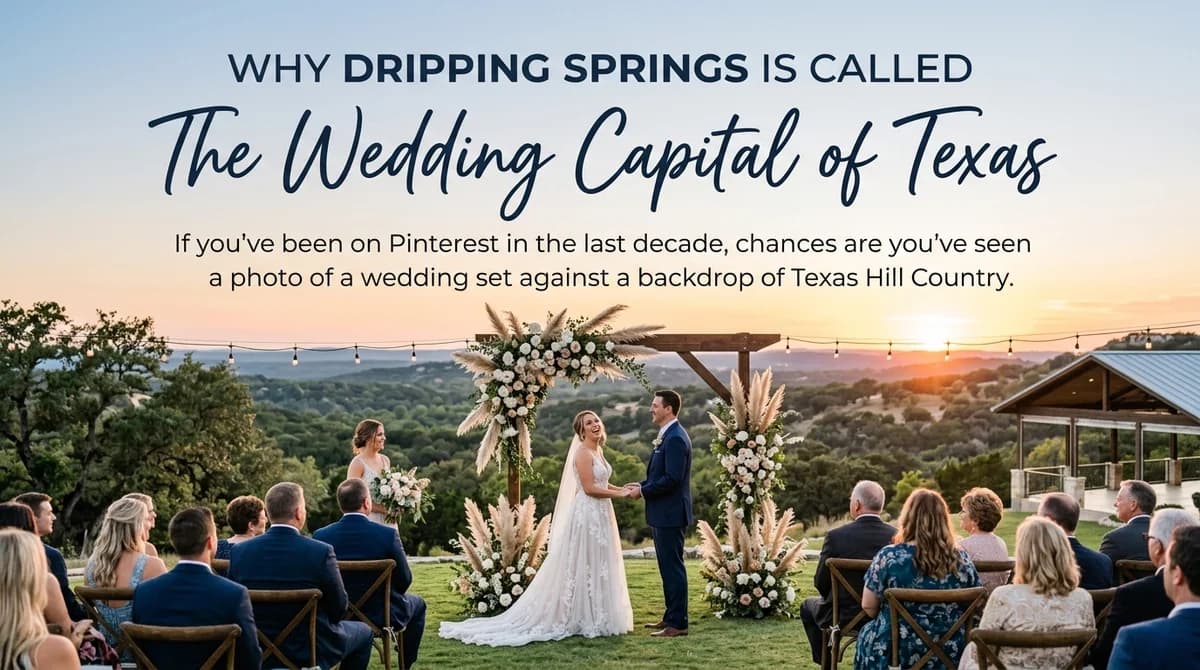
If you've been on Pinterest in the last decade, chances are you've seen a photo of a wedding set against a backdrop of Texas Hill Country oaks, golden afternoon light, and sweeping ranch views — and chances are equally good that wedding happened in or around Dripping Springs. The title "Wedding Capital of Texas" isn't just marketing. It's an honest description of what this town has become, and once you understand why, the whole thing makes complete sense.
Located about 25 miles west of Austin on US-290, Dripping Springs sits in a pocket of the Hill Country that manages to feel genuinely rural while being close enough to a major city to make logistics manageable. That combination, plus the landscape, plus the culture that's developed around it, is what makes this the destination for Texas couples who want something beautiful and memorable.
Here's the full story of how Dripping Springs earned that title — and why it's still the best place in Texas to get married.
The Geography That Makes It Work
Start with the land itself. The Hill Country around Dripping Springs is exactly what people mean when they talk about "the Texas Hill Country" as an ideal. Rolling limestone hills covered in live oak and cedar. Open ranch land with views that go for miles. Creek-fed valleys with ancient trees. Wildflower fields in the spring. Sunsets that turn everything amber and rose.
This is the raw material that makes a wedding venue look like something out of a magazine without much effort. Put a tent under mature live oaks on a working ranch, add string lights, and you've got something that photographers — and the couples they're shooting — love immediately.
The region has enough topographic variety to support dozens of venue types: waterfront properties on Onion Creek, hilltop ranches with panoramic views, wooded estates that feel secluded and private, open meadows that catch the Hill Country light. Whatever aesthetic a couple is going for, there's a venue in the Dripping Springs area that delivers it.
How the Industry Grew
The wedding venue industry in Dripping Springs didn't happen overnight. It built gradually as the Austin wedding market grew alongside Austin's population boom, and as couples increasingly sought locations outside the city for the natural beauty they couldn't get in an urban venue.
As a few early venues established themselves and word spread — through wedding blogs, photographer portfolios, and social media — the area's reputation grew. More venues opened. More photographers specializing in Hill Country weddings based themselves here. Caterers, florists, bands, and event planners followed. The ecosystem of wedding-adjacent businesses that exists in Dripping Springs today is comprehensive enough to pull off virtually any style of wedding with vendors who know the terrain, know the light, and have done it a hundred times before.
The city of Dripping Springs has leaned into the identity. The official trademark "Wedding Capital of Texas®" represents an entire economic identity built around events, tourism, and the hospitality industry. Local wineries and distilleries regularly host wedding receptions. Bed and breakfasts cater to wedding party guests. The event calendar is shaped in large part by the wedding season.
What Makes a Dripping Springs Wedding Different
A lot of places claim to be great for weddings. What actually distinguishes a Dripping Springs wedding from the alternatives?
Scale and privacy. Many of the venues here are set on large properties — ten, twenty, fifty acres or more — which means couples have the whole place to themselves for their event. There's no risk of sharing a parking lot with another event or having strangers wander through your reception. The privacy that comes with a Hill Country ranch property is something urban venues simply can't offer.
The natural setting as the venue. In most urban wedding venues, décor is how you create the atmosphere you want. In Dripping Springs, the landscape does much of that work for you. Ancient live oaks with Spanish moss. Rolling hills at golden hour. The sounds of a Texas night — crickets, breeze through the cedar, maybe a distant coyote. The natural world is part of the event in a way that doesn't happen indoors.
Proximity to Austin. Being 25 miles from Austin means that couples can draw guests from the city easily, access the full Austin market of vendors, caterers, and musicians, and still enjoy a location that feels completely removed from urban life. Guests can stay in Austin and drive out, or stay at the venue itself. The logistics work.
The vendor community. The concentration of experienced wedding vendors in Dripping Springs is remarkable. Photographers who know how to work with Hill Country light at every hour. Caterers who've fed thousands of guests on ranch properties. Planners who know every venue's quirks and every vendor's strengths. The expertise in this community is deep.
The Venues That Anchor the Reputation
A few specific venues have done more than most to establish Dripping Springs as the wedding destination it is today.
Camp Lucy is arguably the most well-known wedding venue in the area. Set on a Texas Hill Country ranch along Onion Creek, Camp Lucy offers four distinct venue spaces — Ian's Chapel, Sacred Oaks, The Vineyard, and Whit's Inn — plus luxury resort-style accommodations for the wedding party and guests. Ian's Chapel is a stunning stone building that photographs beautifully in any light. Sacred Oaks does exactly what the name suggests: puts your wedding under a canopy of ancient live oaks in an outdoor setting that needs no additional decoration. Camp Lucy is a full resort experience that handles rehearsal dinners, day-after brunches, and everything in between.
The Preserve at Canyon Lake offers a grand-scale option for larger weddings, with over 15,000 square feet of covered event space including a chapel, courtyard, and reception hall that can accommodate 300+ guests. The property is surrounded by abundant Hill Country wildlife and the natural landscape that defines the region.
Thurman's Mansion brings an old Texas grandeur to the mix — a historic property where couples can host cocktail hours overlooking Hill Country sunsets from a genuine Texas mansion. The combination of history and landscape is a draw for couples who want something with a sense of place and legacy.
Dripping Springs Distilling has become an unexpected but popular event venue, using its beautiful 10-acre property for weddings that want to incorporate Texas's craft spirits culture into the celebration. Voted Best Distillery in Texas in the 2024 Texas Travel Awards, the property offers flexible space for groups from small gatherings up to 175 guests.
The Wildflower Factor
No discussion of weddings in Dripping Springs is complete without mentioning the spring wildflower season. From late March through April — sometimes into May, depending on the year's rainfall — the Hill Country around Dripping Springs erupts in bluebonnets, Indian paintbrush, Mexican hat, and dozens of other wildflower species.
A wedding in Dripping Springs in late April, when the bluebonnets are still holding and the live oaks are leafing out in that particular shade of spring green, produces photographs that couples keep on their walls for decades. It's not a coincidence that spring is the most booked season at virtually every venue in the area.
If you're planning a spring wedding and want the full wildflower experience, book early — very early. Peak spring weekends fill up a year or more in advance at the most sought-after venues.
Planning a Wedding in Dripping Springs: Practical Notes
Start the venue search early. The most popular venues book 12-18 months out for prime spring and fall dates. If you have a specific venue in mind, reach out as soon as you're engaged.
Consider a weekday or off-peak date. If your first-choice venue is booked for Saturday in April, ask about Fridays, Sundays, or fall dates. You'll often get better availability and potentially better pricing.
Build your vendor team locally. Photographers, florists, caterers, and planners who work regularly in the Dripping Springs area know the venues, know the light, and know how to handle the specific challenges (and opportunities) of Hill Country outdoor events. Local expertise is worth seeking out.
Plan for the weather. Texas weather is beautiful and unpredictable. Have a plan B for rain. Most venues have covered options or can help arrange tent structures. The Hill Country wind can be a factor for outdoor ceremonies. Ask your venue coordinator about contingencies.
Take advantage of the surrounding experience. Your guests are in one of the most beautiful parts of Texas. Point them toward the local distilleries, wineries, and restaurants. A wedding weekend in Dripping Springs, with tasting rooms and Hill Country trails and great food, is a full experience that people talk about for years.
A Title Well Earned
"The Wedding Capital of Texas" is a bold claim for a town of around 10,000 people. But Dripping Springs has earned it the old-fashioned way: by being genuinely excellent at the thing it's known for. The landscape is real. The venues are exceptional. The vendor community is experienced and talented. And the weddings that happen here — weekend after weekend, year after year — live up to the reputation.
If you're planning a Texas wedding and you want the setting, the experience, and the photographs to reflect the best of what this state has to offer, Dripping Springs is where you should be looking.